

3D Printer Adhesive Tapes Wholesale-Blue Wide Masking Tape Polyimide Heat Tape etc for Laser Cutting Engraving & 3D Printing Bed
Various 3D Printer Adhesive Tape
Blue Painter’s Tape
Kapton Polyimide Tape
PET high Temperature Tape
Fiberglass Tape
Thermal Tape etc
3D printer adhesive tapes are commonly classified into three functional categories: heated bed adhesion tapes (to prevent warping and layer shifting), auxiliary & post-processing tapes (masking, fixing, protection), and thermal tapes (heat dissipation and component bonding). The key selection factors include printing material, heated bed temperature, build plate surface, and hardware thermal management requirements. Below are the mainstream tape types and typical applications:
Heated Bed Adhesion Tapes: Improve first-layer adhesion, reduce warping and edge lift, and enhance print success rates on glass, aluminum, and PEI build plates.
Auxiliary / Post-Processing Tapes: Used for masking, temporary fixing, surface protection, and post-print finishing during printing and assembly.
Thermal Tapes (Thermally Conductive Adhesive Tapes): Designed for heat transfer and secure bonding of electronic components, sensors, and cooling parts in 3D printers.
This functional classification helps users choose the right 3D printer tape for PLA, ABS, PETG, nylon, and other filaments, ensuring stable printing performance and reliable thermal management.
I. Core Heated Bed Adhesion Tapes for 3D Printing
1. Blue Painter’s Masking Tape for 3D Printing
Key Advantages: Low cost, easy to remove with no residue, ideal for PLA printing.
Applications: Glass or aluminum build plates for PLA 3D printing; temporary bed adhesion. Prints release easily after cooling, protecting the model’s bottom surface.
Recommended Specs: 3/4/5/6/9/12 inch width and 210mm*200m sheet size.
Able to withstand temps up to 248°F/120°C. It can be used as an alternative to 3M 2090 blue masking tape.


2. Kapton Tape (Polyimide Heat Tape for 3D Printing)
Key Advantages: Extreme high-temperature resistance (-269 °C to 260 °C), silicone adhesive, suitable for high-temperature filaments. Stable adhesion at bed temperatures of 80–120 °C.
Applications: ABS, Nylon, PC and other high-temp 3D printing materials; also used for electrical insulation and long-term high-temperature operation.
Notes: Smooth surface—adhesion can be enhanced with glue stick or hairspray. Higher cost compared to blue painter’s tape.

3. PET High-Temperature 3D Printing Tape
Key Advantages: Heat resistance of 150–200 °C, high tensile strength, excellent chemical resistance. More cost-effective than Kapton tape.
Applications: A Kapton alternative for medium-to-high temperature 3D printing; ideal for **PETG** and **TPU** filaments, balancing performance and cost.

4. PEI Composite 3D Printing Tape
Key Advantages: Strong bed adhesion, reusable, heat resistance up to 120 °C. Compatible with PLA, ABS, and PETG without frequent replacement.
Applications: Long-term and batch 3D printing operations, reducing tape consumption and lowering overall printing costs.
These 3D printing adhesive tapes are essential solutions for improving bed adhesion, preventing warping, and achieving consistent, high-quality 3D prints across different materials.
II. Auxiliary & Post-Processing Tapes for 3D Printing
In addition to bed adhesion tapes, 3D printing tapes are widely used for auxiliary fixing and post-processing to improve printing stability, finishing quality, and workflow efficiency.
1. High-Temperature Double-Sided Tape for 3D Printing
Applications:
Securing PEI sheets, fiberglass plates, and build surfaces on heated beds
High-temperature silicone adhesive ensures strong bonding without shifting
Maintains stability during long print jobs and repeated heating cycles
Ideal for: Build plate fixing and professional 3D printer setups
2. Low-Tack Masking Tape for 3D Printing
Applications:
Masking non-spray areas during post-processing painting or sandblasting
Protecting fine details and surfaces of 3D printed parts
Easy removal with no adhesive residue, preventing surface damage
Ideal for: Model finishing, painting, and surface protection
3. Filament Reinforced Tape (Fiber Tape) for 3D Printing
Applications:
Securing large-size or heavy 3D printed models
High tensile strength prevents tearing or breakage
Reduces part movement and vibration during printing and handling
Ideal for: Large prints, industrial 3D printing, and heavy model fixation

III. Thermal Tape for 3D Printing (Essential for Hardware Maintenance & Modifications)
Thermal tape for 3D printing is specially designed for hardware cooling and component fixation in 3D printers. It is mainly used during printer assembly, maintenance, and upgrades, rather than during the actual printing process.
Core Advantages of Thermal Tape for 3D Printers
High thermal conductivity (≥1.0 W/m·K) for efficient heat dissipation
High temperature resistance (continuous use ≥100°C)
Electrically insulating, preventing short circuits
Mostly double-sided thermal adhesive tape, replacing screws or clamps
Improves cooling efficiency while simplifying installation

Key Applications of Thermal Tape in 3D Printing
1. Hotend / Nozzle Cooling Fixation
Used between the heater block and cooling fan with heat sinks
Enhances heat transfer and prevents overheating of stepper motors
2. Mainboard & Driver Board Heat Dissipation
Applied to driver chips (e.g. TMC2208) and power modules with heat sinks
Reduces chip temperature, preventing print stuttering, layer shifts, and missed steps
3. LED Strips & Sensor Mounting (Thermal + Fixing Function)
Secures upgraded accessories while dissipating heat
Prevents local heat buildup, easy removal with no residue
Selection Tips for 3D Printer Thermal Tape
Choose double-sided, thermally conductive, electrically insulating tape
Recommended thermal conductivity: ≥1.5 W/m·K
Wide temperature resistance: -40°C to 200°C
Typical example: 3M™ 8810 Thermal Conductive Adhesive Tape
IV. Quick Selection Guide (By Printing Material)
| Printing Material | Recommended 3D Printer Adhesive Tape | Heated Bed Temperature | Key Advantages |
|---|---|---|---|
| PLA | Blue Painter’s Tape | ≤80 °C | Low cost, easy removal, no residue |
| ABS / Nylon | Kapton Tape (Polyimide Tape) | 80–260 °C | High temperature resistance, stable adhesion |
| PETG / TPU | PET High Temperature Tape | 60–80 °C | Cost-effective, moderate heat resistance |
| Mass Production Printing | PEI Composite Tape | ≤120 °C | Reusable, strong bed adhesion |
| Hardware Heat Dissipation | Thermal Tape | — | High thermal conductivity, electrical insulation, secure component fixing |
V. Practical Tips for Using 3D Printing Tape
Heated Bed Cleaning: Clean the build plate with isopropyl alcohol before applying 3D printing tape to improve bed adhesion and bonding performance.
Tape Application:
Blue painter’s tape can be slightly overlapped for full coverage. Kapton tape and PET high-temperature tape should be applied as smoothly as possible to minimize air bubbles and ensure consistent adhesion.Temperature Matching:
For high-temperature filaments, choose Kapton tape or PET 3D printing tape to avoid softening, lifting, or adhesive failure caused by low-temperature tapes.Thermal Tape Usage:
Clean component surfaces before applying 3D printer thermal tape. Press firmly to eliminate air gaps and maximize heat transfer efficiency for reliable hardware cooling.
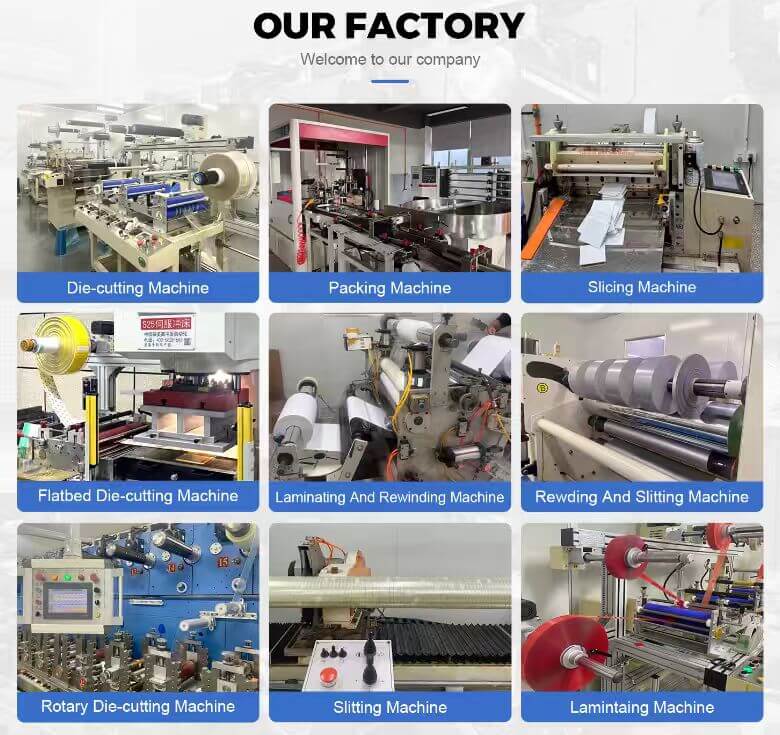
Factory Display:
With over two decades of dedicated expertise in the adhesive tape and protective film industry, we are a one-stop solution provider that integrates manufacturing, distribution, and value-added processing. We produce a comprehensive range of adhesive tapes and protective films, and also distribute renowned international brands including 3M, Tesa, Nitto, Sekisui etc. Our full-service capabilities cover coating, slitting, die-cutting, and packaging, enabling us to deliver high-quality products to customers across the globe.
Inquiry Now:
Related products

Flame-retardant PVC Vinyl Insulating Electrical Tape for Wire Bundling Cable Harness Color Coding
Tearable Heavy Duty Sliver Cloth Duct Tape for General Repair Construction Sealing Bundling
High Temperature Resistance Flame-retardant Orange Ceramic Silicone Self Bonding Tape for Electrical Insulation EV Car Lithium Battery
Non-reflective Matte Cloth Duct Tape for Stage Photography Equipment Fixing Decoration